Inventory & Warehousing
Know what you have, where it is and what you can actually use
Track stock in every warehouse, move it between locations with a dispatch and receipt, correct counts with a reviewed adjustment, and keep damaged goods on hold until someone decides what to do with them.
Who it helps
Warehouse and store managers
Run receipts, transfers and holds with a record of who did what and when.
Operations leads with several locations
See stock per warehouse, and what is in transit between them.
Finance
Stock movements carry their cost, so inventory value follows the physical stock.
How the workflow runs
Receive stock
Record a goods receipt into a warehouse. An arrival inspection accepts quantities before they are added to stock.
Transfer between warehouses
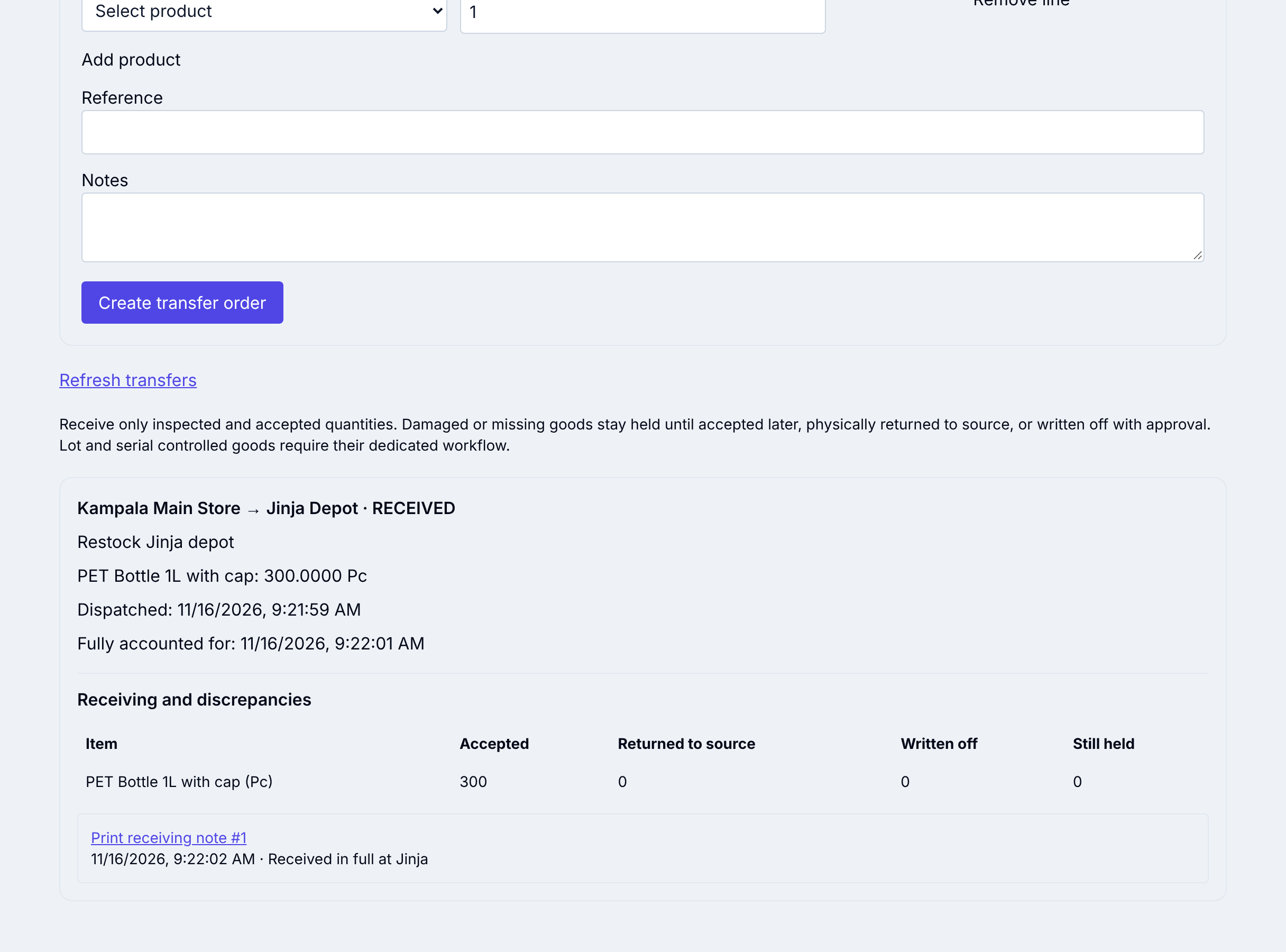
Plan a transfer order, dispatch it and receive it at the destination. Goods in transit cannot be sold, and only inspected, accepted quantities are received.
Count and correct
Schedule a stock count for a warehouse with the expected quantities, then post any difference as an inventory adjustment against a variance account.
Place damaged stock on quality hold
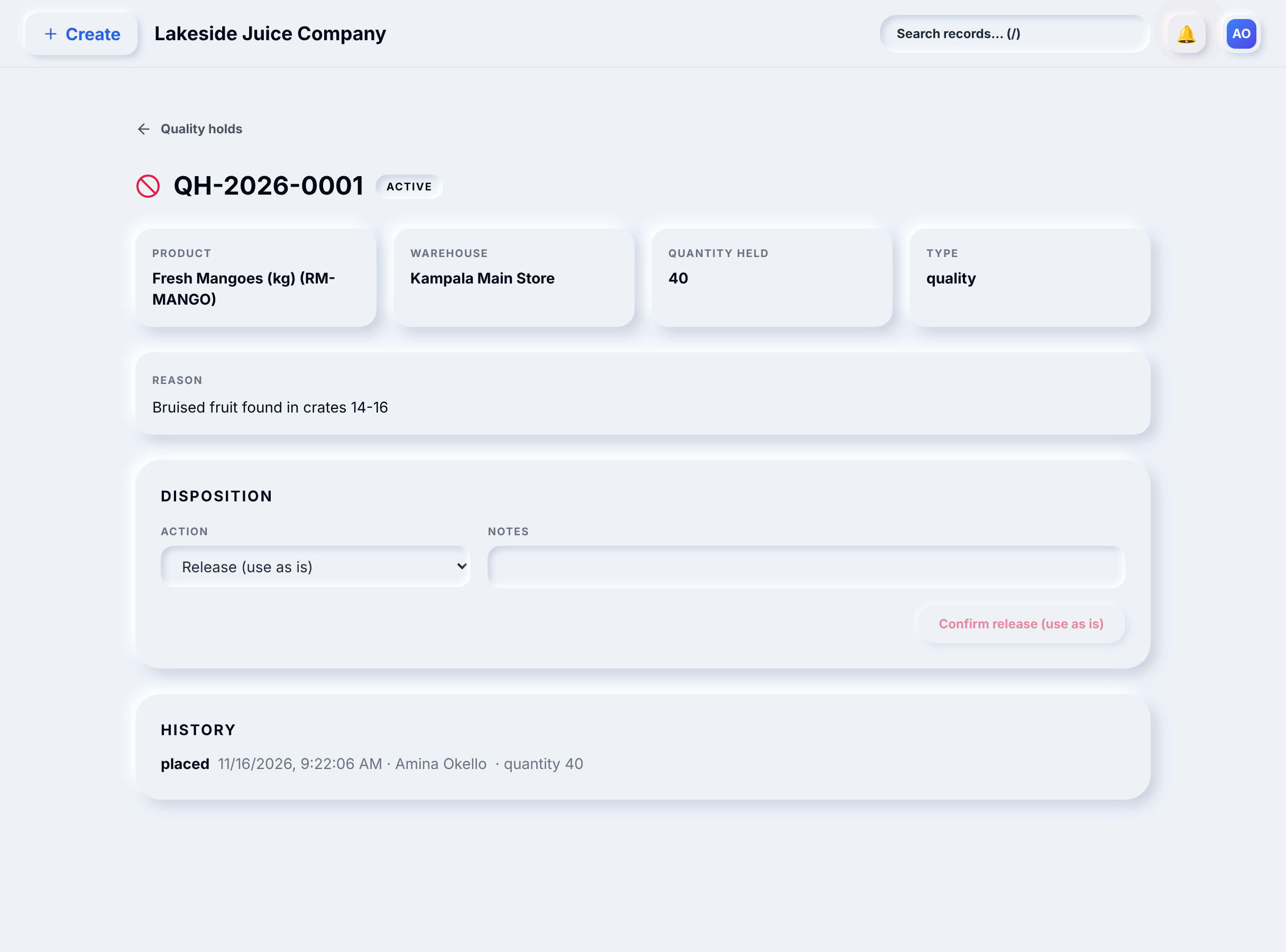
Put a quantity on hold with a reason. Held stock stays in the warehouse but is reserved, so it cannot be issued until it is released or scrapped.
Stock on hand vs. stock available to issue
- On hand
- What is physically in the warehouse and on your books.
- Reserved
- Stock that is set aside, for example quantities on quality hold. It is still on hand, but it cannot be sold or used.
- Available
- On hand minus reserved: what you can actually issue to an invoice, a transfer or production.
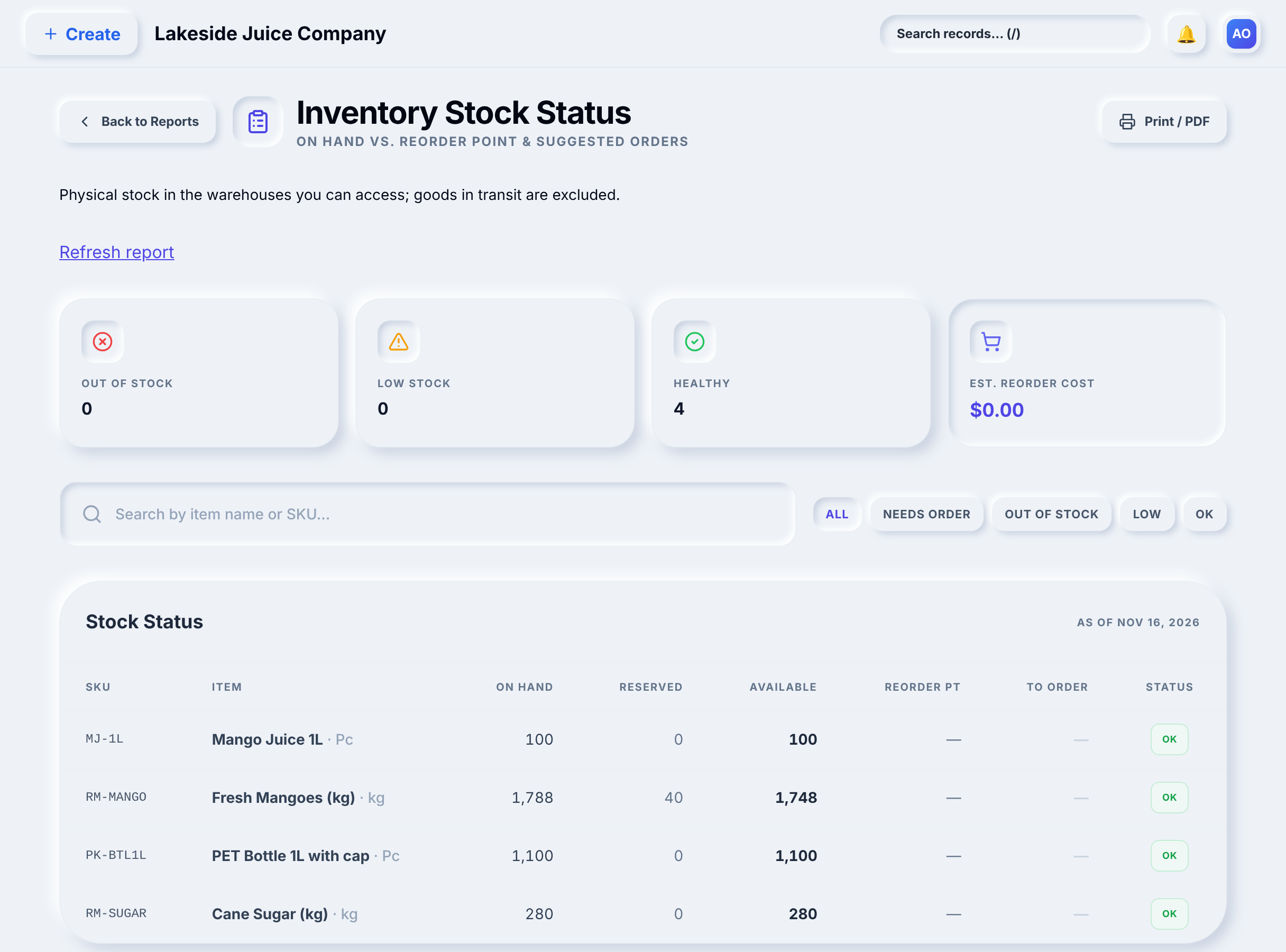
Lakeside’s Kampala store has 1,788 kg of mangoes on hand. 40 kg of bruised fruit is on quality hold, so 1,748 kg is available.
Worked example: Lakeside Juice Company
Lakeside stocks two warehouses: Kampala Main Store and Jinja Depot.
- A delivery of 2,000 kg of mangoes, 1,500 bottles and 300 kg of sugar is received into Kampala after inspection.
- Transfer “Restock Jinja depot” dispatches 300 bottles from Kampala. Jinja receives all 300; nothing is written off or still held.
- The monthly count finds 12 kg of spoiled mangoes, which is posted as an adjustment.
- Crates 14–16 contain bruised fruit, so 40 kg goes on quality hold QH-2026-0001.
The stock status report shows 1,788 kg of mangoes on hand, 40 kg reserved and 1,748 kg available.
Lakeside Juice Company and every name, number and amount in this example are synthetic data created for illustration.
What you see in YourBooks
See this workflow with your own process
We will walk through it with your products, warehouses and accounts in mind.
Book a demo